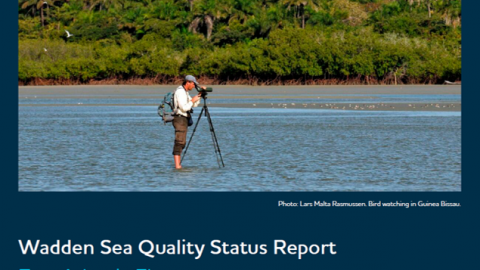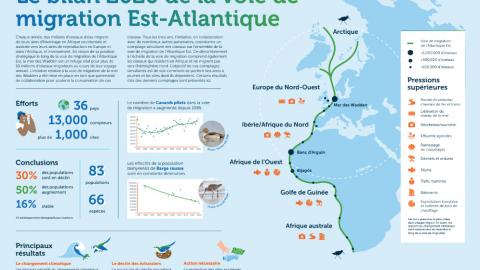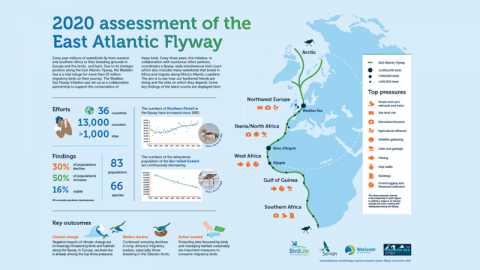
In January 2020, over 13,000 people counted migratory waterbirds at more than 1,000 sites in 36 countries along the East Atlantic Flyway. The key findings have now been published in an extensive assessment report.
To counter urban waste and degradation of the Caponte Mangrove site, a pilot project was implemented by Associação dos Defensores e Amigos do Ambiente (ADAMA).
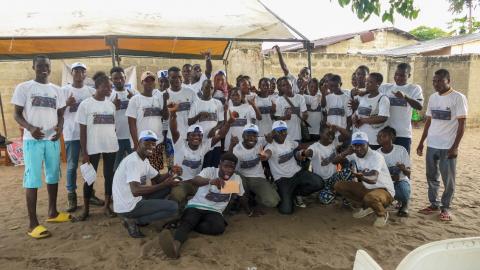
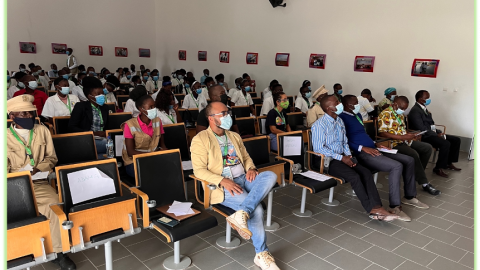
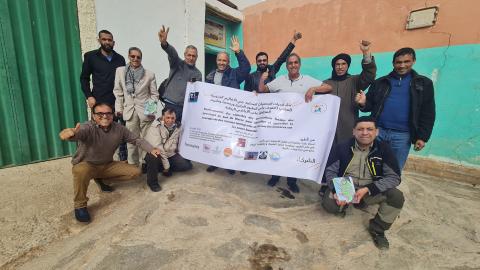
During the third phase of the project, two more training workshops on waterbird identification, and the monitoring of waterbirds and wetlands threats were organized with the participation of two groups from three local NGOs.
Ten tour guides were selected to take part in a training on bird identification, flyways and migration, census and monitoring, and the use of field guides and equipment.
The seminar aims to strengthen the capacity of the various stakeholders of the Environmental and Social Assessment, as a tool for the preservation of protected areas and the promotion of nature-based solutions, in Central Africa.
Under the theme ‘Taking off #ForNature from Africa to the Arctic’ young people from over 30 countries have come together for the first East Atlantic Flyway Youth Forum.
The three projects were conducted in the provinces of Benguela and Luanda: the Protection of Flamingos of Lobito, the Exhibition in memory of Maria Eugênia Lopes and the repair of the Bird Observatory in the Integral Nature Reserve of Ilhéu dos Pássaros.
Countries from Iceland to Estonia and from Norway to South Africa, all along the East Atlantic Flyway, participated in the 2020 East Atlantic Flyway waterbird survey.