
Women in Coastal Communities Turn an Invasive Weed into Sustainable Products
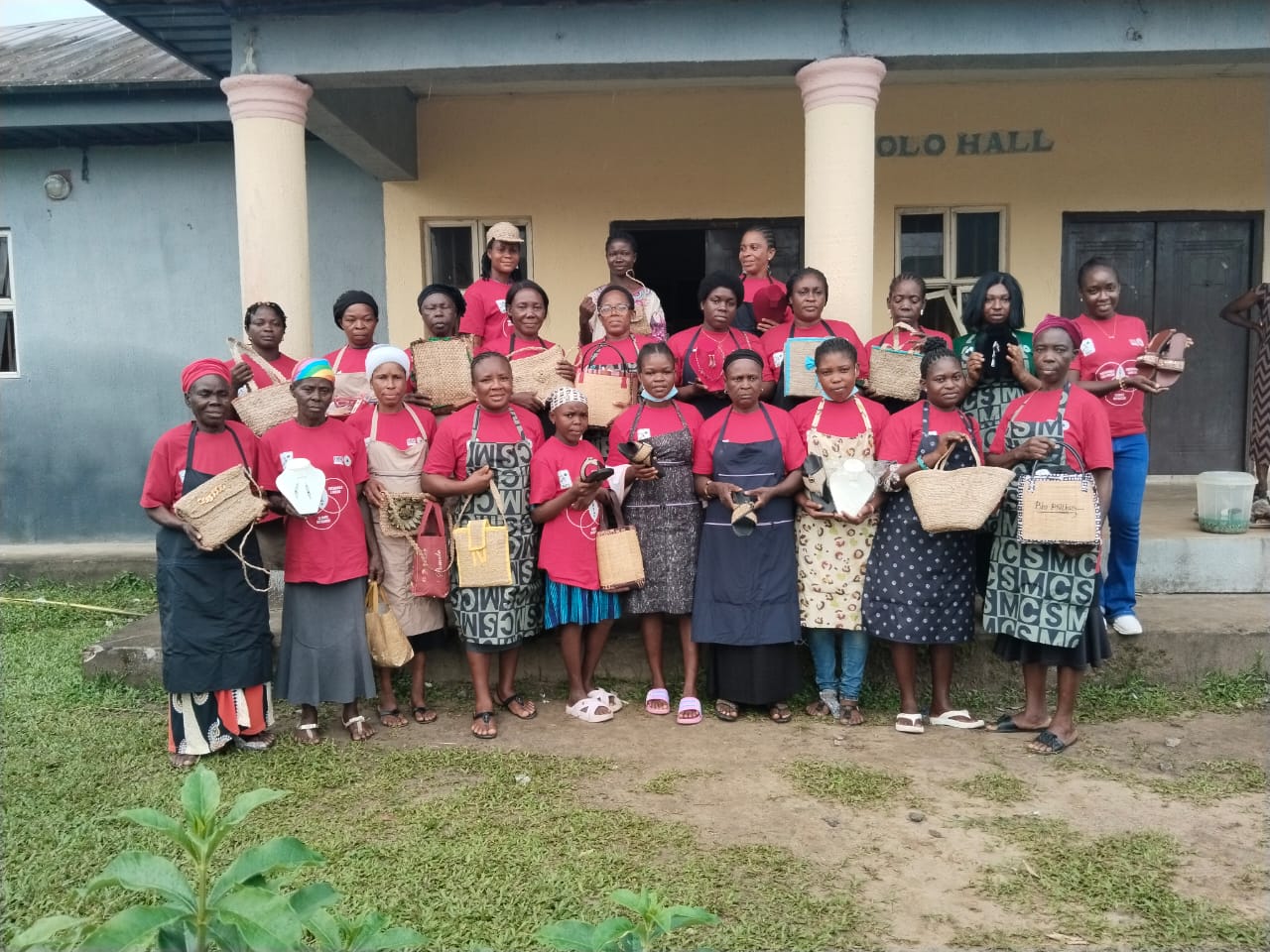
Nipa palm craft training. Photo by NCF.
A COASTAL ECOSYSTEM UNDER PRESSURE
Along Nigeria's 853-kilometre coastline lies one of West Africa's most quietly extraordinary ecosystems. Stretching across roughly 70,000 km² of wetlands, mangroves, and tidal channels, this coastal belt shields shorelines from erosion, encroachment, stores carbon and sustains the livelihood of local communities.
Unfortunately, this area is threatened by exotic and invasive Nipa palm (Nypa fruticans). Decades ago, the Nipa palm arrived on Nigeria's coastline not as a threat but a biological solution introduced to control riverbank erosion. Sadly, the nipa palm bloomed aggressively, and with no natural predators to keep it in check. It spread extensively across hundreds of kilometres, outcompeting native mangroves, altering the physical and ecological landscape, and displacing the wildlife and fish communities that the mangroves had long sustained.
TURNING AN INVASIVE PLANT INTO OPPORTUNITY
For the women of coastal communities who depend on those mangroves for fishing and firewood, the invasion has meant shrinking catches, longer journeys for fuel, and a slow erosion of the way of life they have always known. The other trouble, too, is that unlike in Southeast Asia where the Nipa palm originates, Nigerian communities have no cultural or traditional relationship with the plant. It is alien in every sense of the word ecologically and socially.
That is precisely the gap that the Nigerian Conservation Foundation (NCF), with support from the German IKI fund under the CREAF project, set out to close. Rather than treating the Nipa palm purely as a problem to be uprooted and discarded, the project’s approach is to seek ways to turn the palm into something valuable, while restoring the natural mangrove habitat through replacement planting.
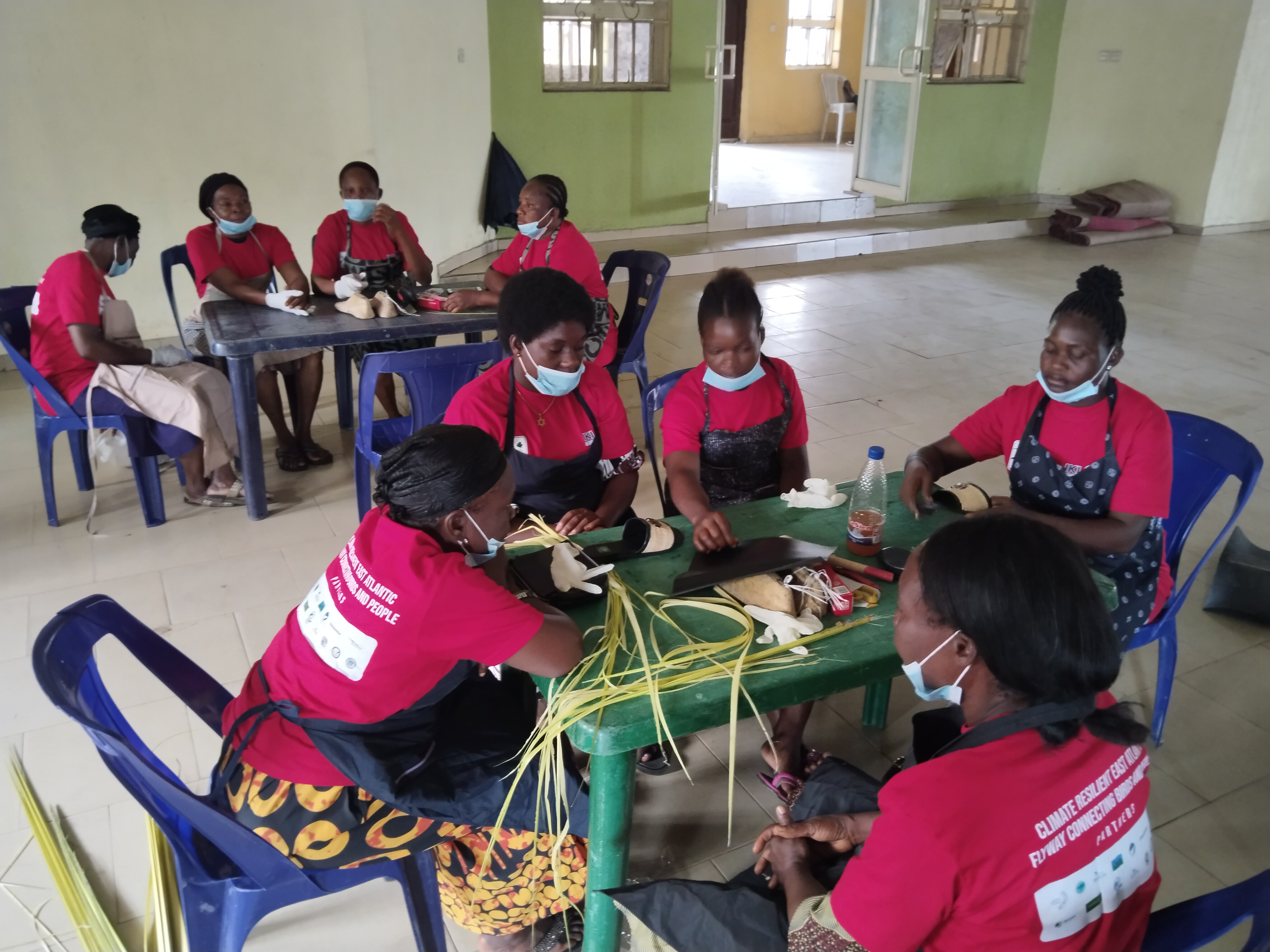
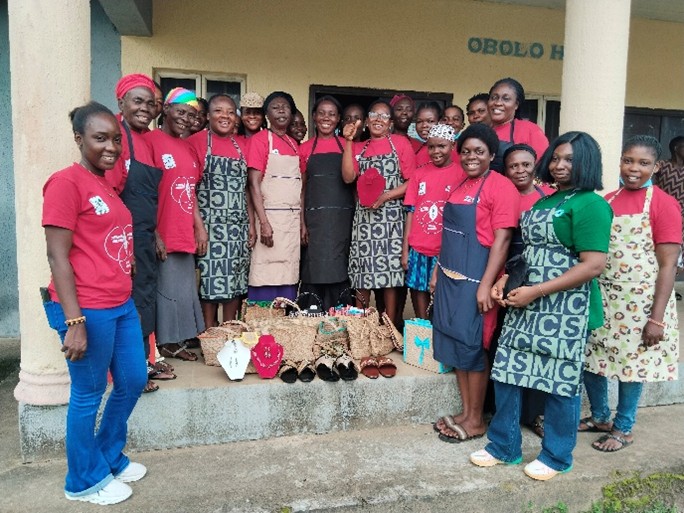
Between August and September 2025, twenty women from communities around Andoni Island, were trained in Nipa palm craft. Working with their hands and guided by practical instruction, they learned to harvest the palm's leaves and fibres and transform them into packaging bags, ornamental pieces, and shoes, among other things.
WOMEN AT THE CENTRE OF THE SOLUTION
The approach is deliberate and deeply rooted in inclusion. Women, in particular, bear the sharpest edge of the mangrove crisis. The mangrove is their primary fishing ground. It is where they gather fuelwood. When it disappears, it is their households that feel it most acutely. So it is women who are at the centre of this intervention, not as beneficiaries receiving handouts, but as trained practitioners, community leaders, and ecological stewards.
Alongside the craft training, the same women are learning to raise mangrove seedlings, nurturing the next generation of coastal forest that will eventually replace the Nipa where it has been cleared. The logic is elegant in its simplicity: harvest the invasive plant, give it economic value, use the income to sustain families, and plant mangroves in the cleared ground.
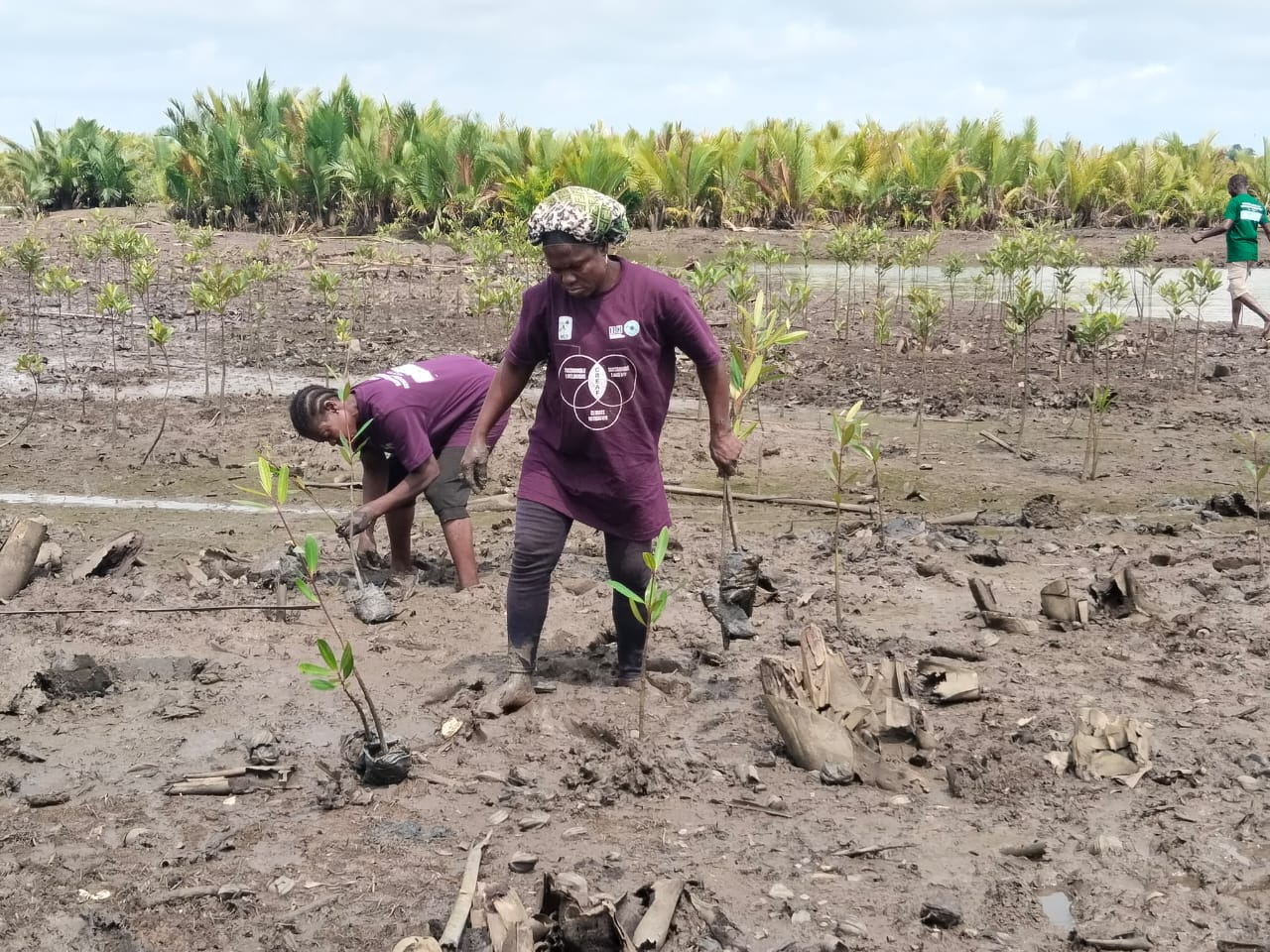
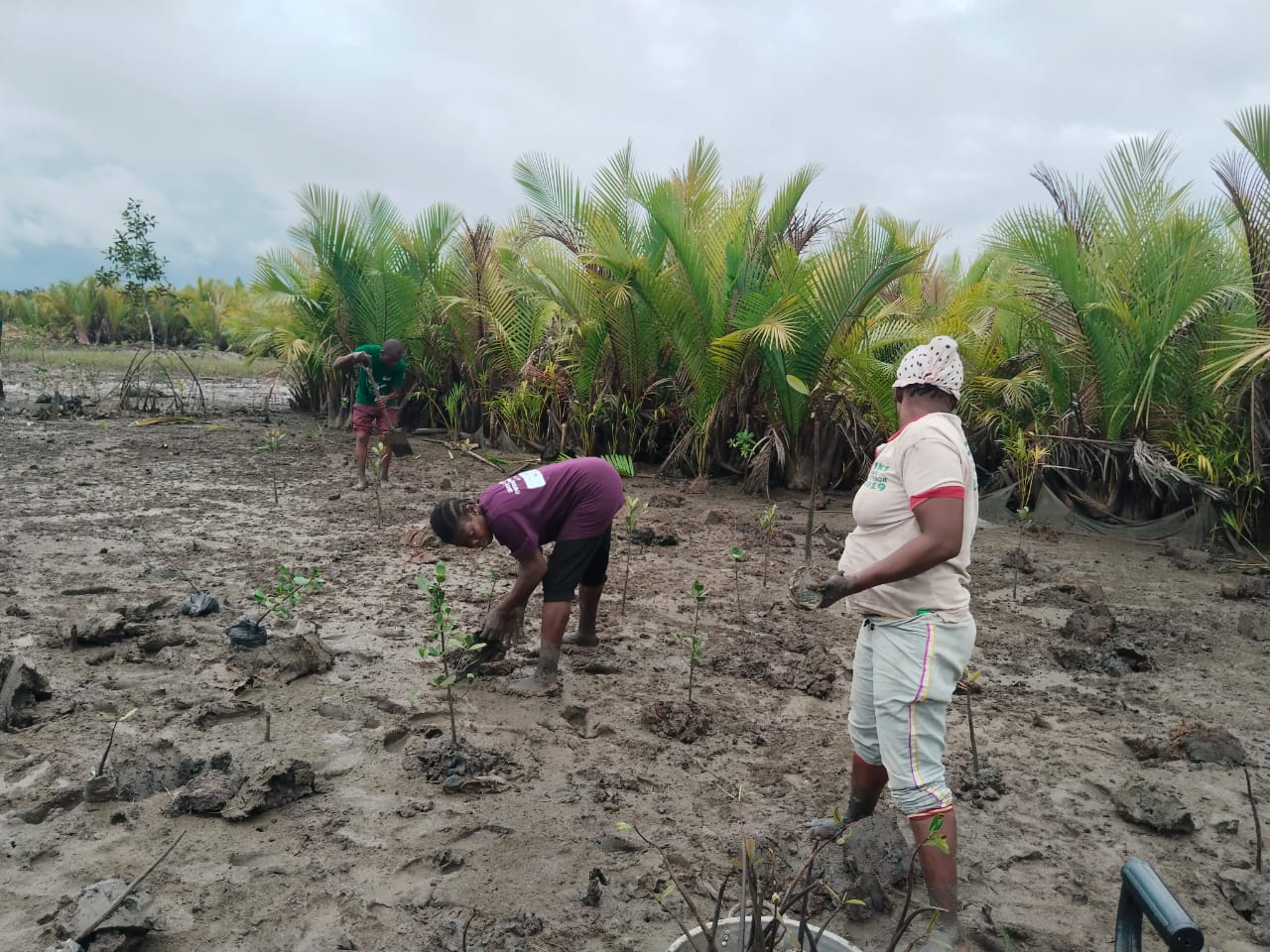
The IKI CREAF project, led by NCF is grounded in that philosophy of acting locally, leading from within communities, and trusting that the people most affected by ecological collapse are also the most capable of reversing it. In doing so, it weaves livelihood, environment, climate resilience, and gender equity, into a single, coherent approach.