
Methodological guidelines for climate impact modelling of tidal wetlands along the East Atlantic Flyway
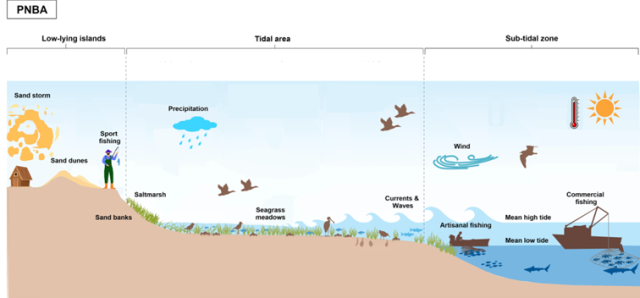
Global warming and extreme weather events are expected to affect coastal habitats worldwide, degrading their ecosystem functionality and possibly causing the collapse of regional fisheries and shorebird populations. Climate impact models are valuable tools for predicting the effects of climate change on coastal wetlands, biodiversity, and the livelihoods of local communities. This information is key for decision-making on risk management, climate adaptation, and long-term planning. However, global or generalised models often fail to capture local-scale impacts because they do not adequately represent site-specific environmental conditions and processes, resulting in inaccurate predictions. Model performance can be improved through the incorporation of local data, particularly long-term monitoring datasets. These methodological guidelines are designed to help local site managers and researchers in establishing long-term climate change monitoring and modelling systems for tidal wetlands along the East Atlantic Flyway, with a specific focus on the Banc d’Arguin in Mauritania and the Bijagós Archipelago in Guinea-Bissau.
The document is published via the external open source platform Zenodo. The "view" button below leads to the publication on Zenodo.