
New Report Maps Opportunities to Strengthen Waterbird Monitoring Along the African Atlantic Coastline
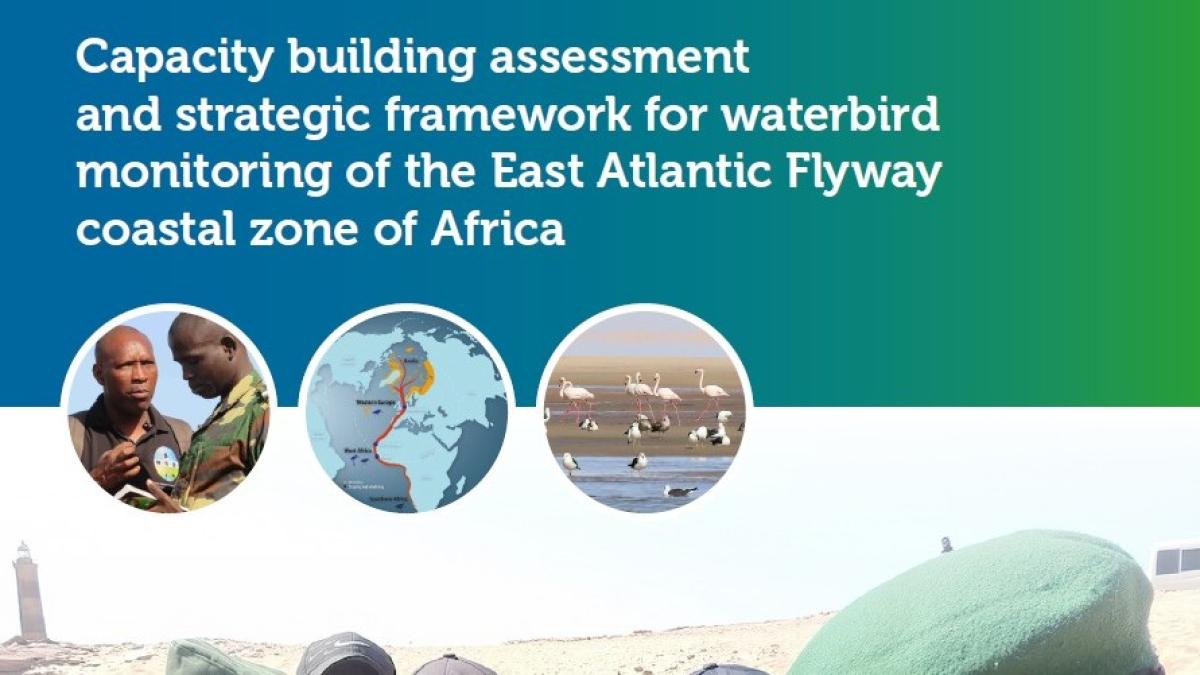
Millions of migratory waterbirds travel annually along the East Atlantic Flyway, using key wetland sites from the Arctic via Western Europe to coastal West Africa. These habitats are essential for foraging, shelter and breeding. Effective monitoring of waterbird populations is critical for conservation, informed decision-making, and international cooperation. A new comprehensive report has been published assessing capacity for waterbird monitoring along the African part of the East Atlantic Flyway and proposing a framework for strengthening and sustaining this capacity for the future.
The report reviews past and current efforts to build monitoring capacity in West Africa, drawing on a wide range of interviews, national workshops, and a detailed review of regional initiatives, training activities, and monitoring programmes. It highlights how early pioneering surveys evolved into more coordinated efforts such as the monitoring programme of the Wadden Sea Flyway Initiative, which is directly linked to International Waterbird Census.
Case studies from key sites —Mauritania’s Parc National du Banc d’Arguin, Senegal’s Parc National du Sine-Saloum, and the Bijagós Archipelago in Guinea-Bissau — illustrate how long-term partnerships have supported both data collection and local capacity growth. The assessment also identifies common challenges, such as fluctuations in funding, resource access and governance, that affect the ability to plan, conduct and use monitoring results.
Based on these findings, the report presents a strategic framework designed to guide future capacity building along the flyway. This framework focuses on enhancing skills, improving institutional support, fostering coordination among partners, and ensuring sustainable and locally owned monitoring efforts.
The assessment and framework aim to support governments, conservation organisations and donors in strengthening waterbird monitoring for the benefit of migratory species and the wetlands on which they depend.