
East Atlantic Flyway Youth Forum 2026
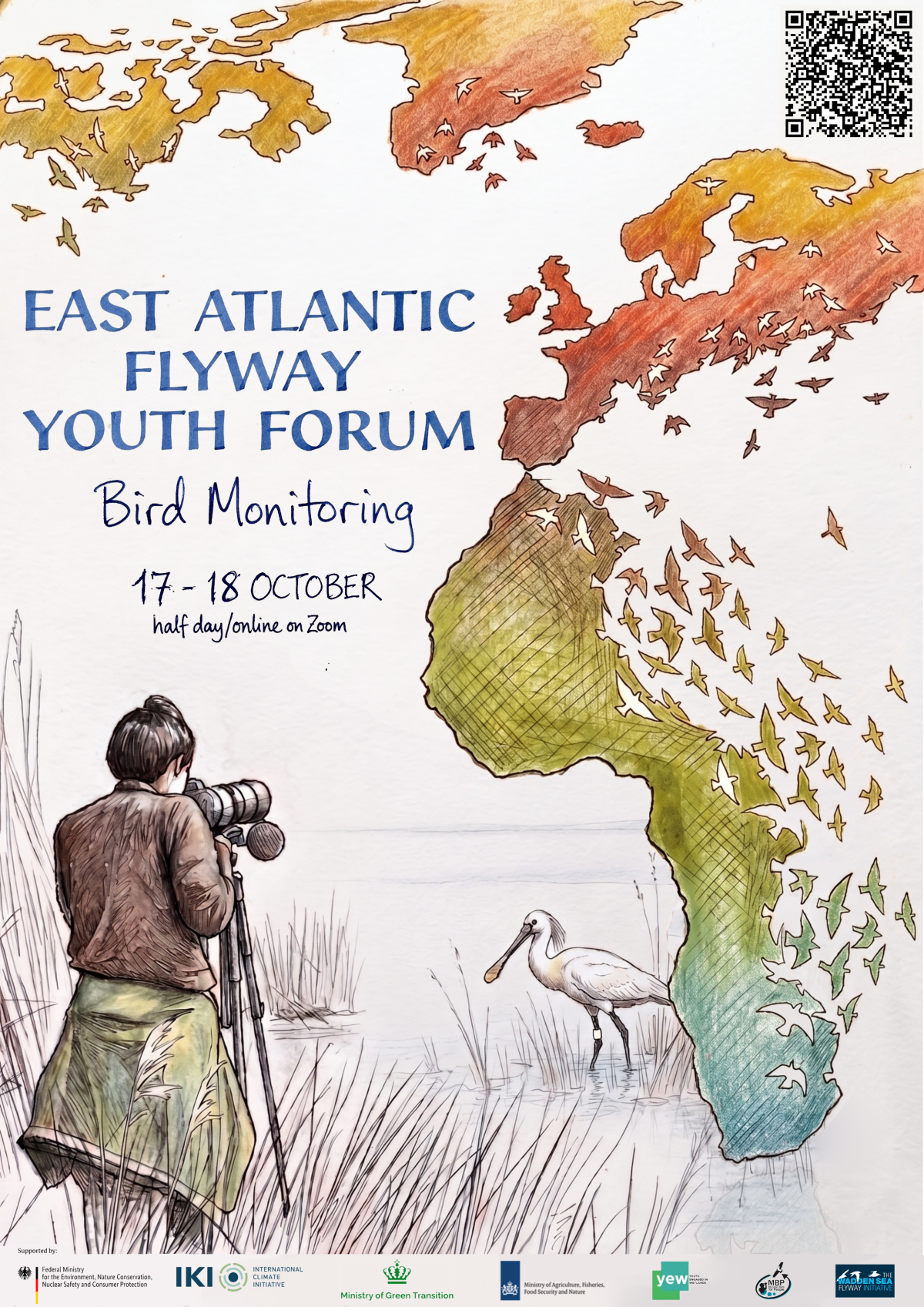
Wings over Wetlands: Monitoring Waterbirds for Conservation
When: 17-18 October, online
Objective: Equip participants with the knowledge, skills, and confidence to identify waterbirds, carry out basic monitoring and data collection, and contribute effectively to waterbird conservation and decision-making initiatives.
Waterbird populations face increasing pressures from habitat loss, climate change, pollution, unsustainable resource use, mainly driven by anthropogenic activities across their distribution ranges. Effective conservation depends on reliable information about the status of waterbird populations and the condition of the wetlands they depend on, including along their migratory routes. Waterbird monitoring provides essential data that enable scientists, site managers, governments, and local communities to assess population sizes, distribution, and trends over time, supporting evidence-based conservation and management along the East Atlantic Flyway.
Young people have an important role to play in these efforts. Across the East Atlantic Flyway, youth are increasingly contributing to citizen science, monitoring programmes, awareness raising, and conservation activities at local, national, and international levels. In the East Atlantic Flyway Youth Forum Declaration, young people highlighted the importance of meaningful youth engagement in decision-making and conservation action, emphasizing their responsibility as the generation that will inherit the future impacts of today's environmental challenges.
To strengthen youth participation in flyway conservation, this year’s forum will introduce the fundamentals of waterbird monitoring, such as waterbird ecology, species identification, survey methods, online tools, and data recording. This is also aligned with the theme of World Migratory Bird Day 2026, “Every Bird Counts – Your Observations Matter!”, which underscores the vital role of community science and citizen participation in advancing the conservation of migratory birds. Through interactive sessions, practical exercises, and discussions, participants will explore how monitoring contributes to wetland and waterbird conservation and how they can become actively involved in monitoring initiatives across the flyway. Participants will also explore how monitoring data can inform conservation priorities, management decisions, and policy.
Beyond building technical skills, the training will provide an opportunity for young people from different countries along the East Atlantic Flyway to connect, exchange experiences, and learn from one another. As migratory waterbirds depend on a network of wetlands across continents, the flyway approach highlights the importance of building connections among people working towards their conservation and sustainable management.
The forum will be open to young people aged 18-30 from countries along the East Atlantic Flyway. Any young person with an interest in wetland or waterbird conservation is encouraged to register here. While aiming for broad geographic representation across the flyway, priority may be given to applicants who demonstrate a particular interest or experience in flyway conservation, including research, monitoring, management, communication, or education.
- Organizers: Common Wadden Sea Secretariat, Migratory Birds for People, Youth Engaged in Wetlands
- Language: English, French (simultaneous interpretation)